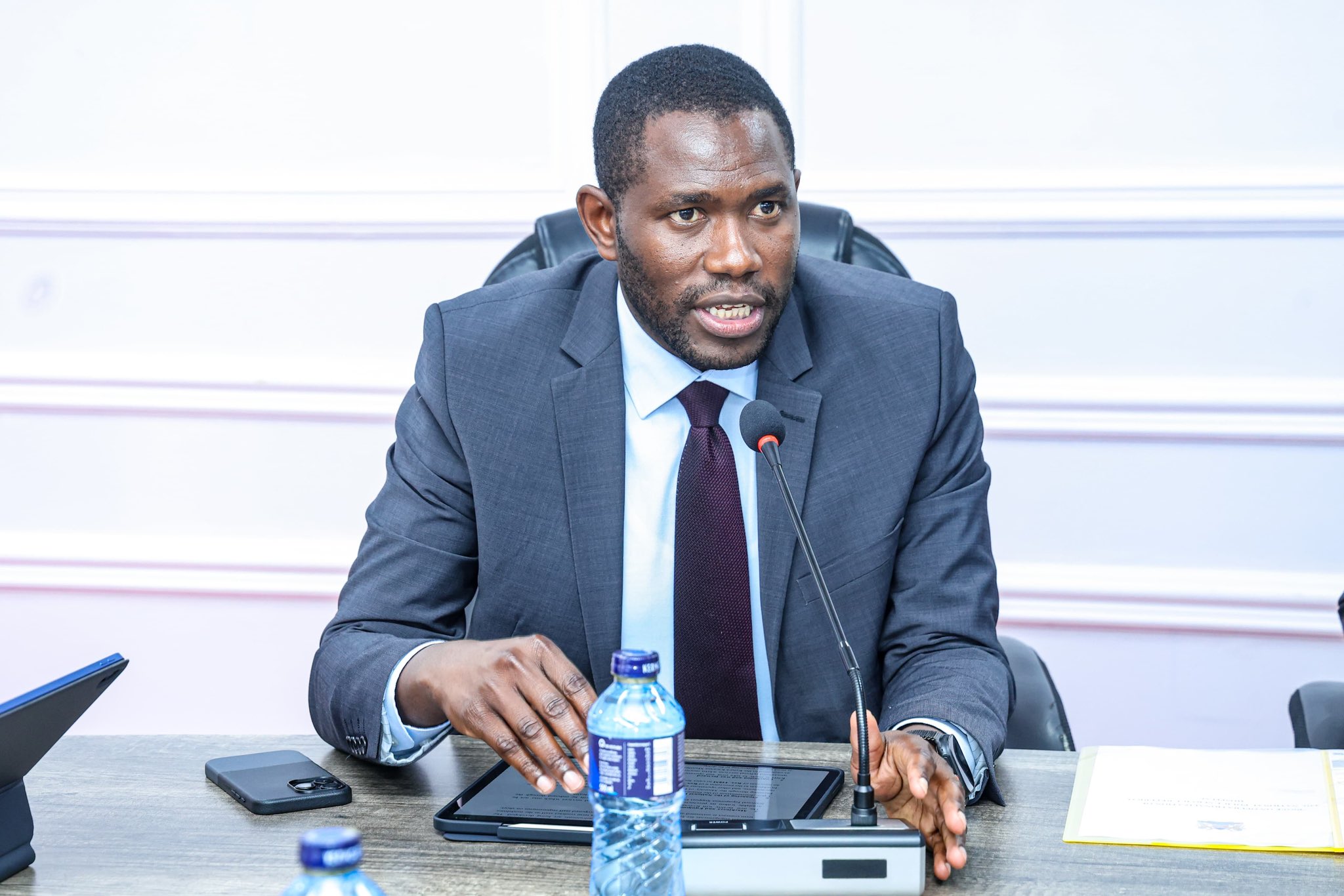
Medical Services Principal Secretary Ouma Oluga has called for urgent, coordinated efforts to eliminate cervical cancer in Kenya, emphasizing HPV vaccination, screening, and stronger county health systems.
Speaking on Monday in Homa Bay County, he warned that thousands of lives remain at risk and urged both national and county governments to prioritize responsibility over politics in delivering accessible, quality healthcare services.
Oluga stressed the scale of the crisis, revealing that thousands of Kenyans are currently battling cancer, with a significant proportion coming from the region.
He described the situation as a serious public health concern that requires immediate and collective action.
“So 7,000 Kenyans are surviving cancer, 4,000 from this region, (Homa Bay County), more than half. So these are serious issues and not political, issues and that they must be tackled,” he said.
Oluga emphasized that prevention strategies such as the Human Papillomavirus (HPV) vaccination and regular screening are key to reversing the trend.
Cervical cancer, primarily caused by persistent infection with the Human Papillomavirus (HPV), remains one of Kenya’s most significant public health challenges, historically ranking as the second most common cancer among women and a leading cause of cancer deaths.
According to Ministry of Health–linked data, Kenya records about 5,800 new cases and more than 3,600 deaths annually, with an incidence rate of 32.8 per 100,000 women.
The burden is disproportionately high in counties such as those in Nyanza, including Homa Bay, as well as counties like Kiambu, which rank among high-prevalence regions.
Screening uptake remains critically low, with national coverage estimated at between 7% and 16%, and many women presenting at advanced stages of the disease.
HPV prevalence is also significant, further driving infection rates and cancer risk.
In response, the government has scaled up interventions, including the introduction of HPV vaccination in 2019, expansion of screening programmes, and rollout of the 2026–2030 cervical cancer elimination strategy aligned with global WHO targets.
Efforts also include adoption of HPV testing technologies and the strengthening county-level healthcare systems.
Despite progress, health experts note that low awareness, weak health infrastructure, and inequalities across counties continue to hinder elimination efforts, reaffirming the need for sustained investment, community engagement, and stronger coordination between national and county governments.
The PS noted that ongoing vaccination campaigns targeting young girls are part of a long-term strategy to eradicate cervical cancer.
“When we come here to do vaccination for HPV, for young girls, there’s something that we want to change. We want to change that story so that in 15 years we eliminate cervical cancer because we can eliminate it,” he said.
He added that screening programmes must also be strengthened to ensure early detection and treatment, which significantly improves survival rates.
The PS called on county governments to take greater responsibility for healthcare delivery, noting that devolved units play a critical role in ensuring that services reach the population effectively.
“We must make our county governments be serious. They must also take back responsibility seriously, not just positions. They must place the responsibility of health very seriously, because people need it,” he said.
Oluga pointed out that while the national government is responsible for policy formulation and setting standards, counties are tasked with service delivery, including staffing hospitals, providing medicines, and maintaining functional equipment.
“The responsibility of service delivery is county government. The national government has policy. We do standards, but the county government must make sure that the hospital has a doctor, the hospital has medicine, and that the hospital has equipment that is serviced and is functional,” he said.
He reaffirmed the importance of collaboration between the two levels of government, arguing that healthcare should not be fragmented.
“The national government and the county government must work seamlessly, because we serve the same Kenyan at the end of the day. The patient can’t be a county government patient and a national government patient,” he said.
The PS also highlighted the role of the Social Health Authority as a key mechanism to ensure sustainable healthcare financing. He urged citizens to take registration seriously to enable access to services.
“As we do this, we must have this mechanism to pay, and that mechanism is the Social Health Authority,” he said.
In his remarks, the medical supplies PS appealed to Kenyans to view cervical cancer not as a distant government issue, but as a personal and community challenge that demands attention.
“There’s nothing political around it. It’s very personal, and I know many of you just like me. I know relatives who have died because of cervical cancer,” he said.
He added that reluctance to confront the problem has contributed to its persistence.
“Because we don’t like to confront the big problems, we think it’s a government problem, we think that it is not us, that it’s somebody else’s problem,” he said.
He concluded by urging leaders to prioritise responsibility over titles, noting that effective leadership is essential in addressing healthcare challenges.
“That is why I talk about responsibility of leadership, not position of leadership, because understanding that responsibility is key to this collaboration right now,” he said.
His remarks come amid ongoing efforts by the government to strengthen healthcare systems and expand access to preventive services across the country.